Discipline: The Hidden Key to Innovation
In the innovation labs I’ve worked in, I’ve seen how FEAR can stifle creativity. When a dry spell comes, and there’s no new ideas, leader’s first instinct is to look outside for ideas. So, they send the team back to the drawing board. To source new ideas, scouring the internet for yet to be discovered “trends.” We have live Miro brainstorming sessions. Still nothing.
But in the innovation labs I’ve worked in, I’ve found that what actually happens is that without structure, there is confusion, misaslignment and lack of direction. Too much autonomy can lead to bottlenecks and lack of ownership. You have some people that hesitate because they aren’t ready to step forward and take ownership for fear of being knocked down. Others see this as the opportunity to knock down the competition and step forward with the brand new idea that’s going to save the team. This causes others, with bright ideas, to hesitate because they don’t actually see a path forward. They aren’t sure what “good enough” and “great idea” looks like or how to move the idea forward.
It’s not a lack of ideas that stalls progress. It’s structure. It’s process. It’s heriarchy.
What’s Driving Fear?
When people have clearly defined systems—innovation pathways, communication frameworks, and structured vetting processes, they will create and share their ideas. They will have the freedom, the confidence to think.
Innovation will start to churn more predicitvely. Both good ideas and bad ones that end up on the scrap heap — and those are valuable too.
The path out of the creative dry spell is always on the inside. The cause isn’t fresh ideas, it’s internal confusion, misalignment, and FEAR. Some people hesitate to step forward—worried they’ll be shot down or overruled.
Others seize the open space to push their idea as the solution, regardless of team input.
And then there are the quiet innovators—the ones with real insight—who hold back because they don’t see a path forward. They’re not sure what “good enough” or what a “great idea” even looks like.
On the other hand, the most productive teams I’ve seen weren’t operating in chaos. They had clear pathways, strongly aligned leaders who shared definitions, and a common understanding of value.
Wise leaders know the power of discipline. In The Dichotomy of Leadership by Jocko Willink & Leif Babin, the authors explain why discipline equals freedom. It’s not a contradiciton to the creative process — it’s the gateway. Any creative understands that discipline, the rules, structure and repetition lead to freedom, creativity and innovation.
Discipline Creates the Freedom To Innovate
But when you’re leading teams through complex work, this paradox reveals that discipline creates agility. We start to believe th at structure is the enemy. So, to foster a more innovative culture, we remove structure. Fewer meetings, looser processes, creative brainstorming. 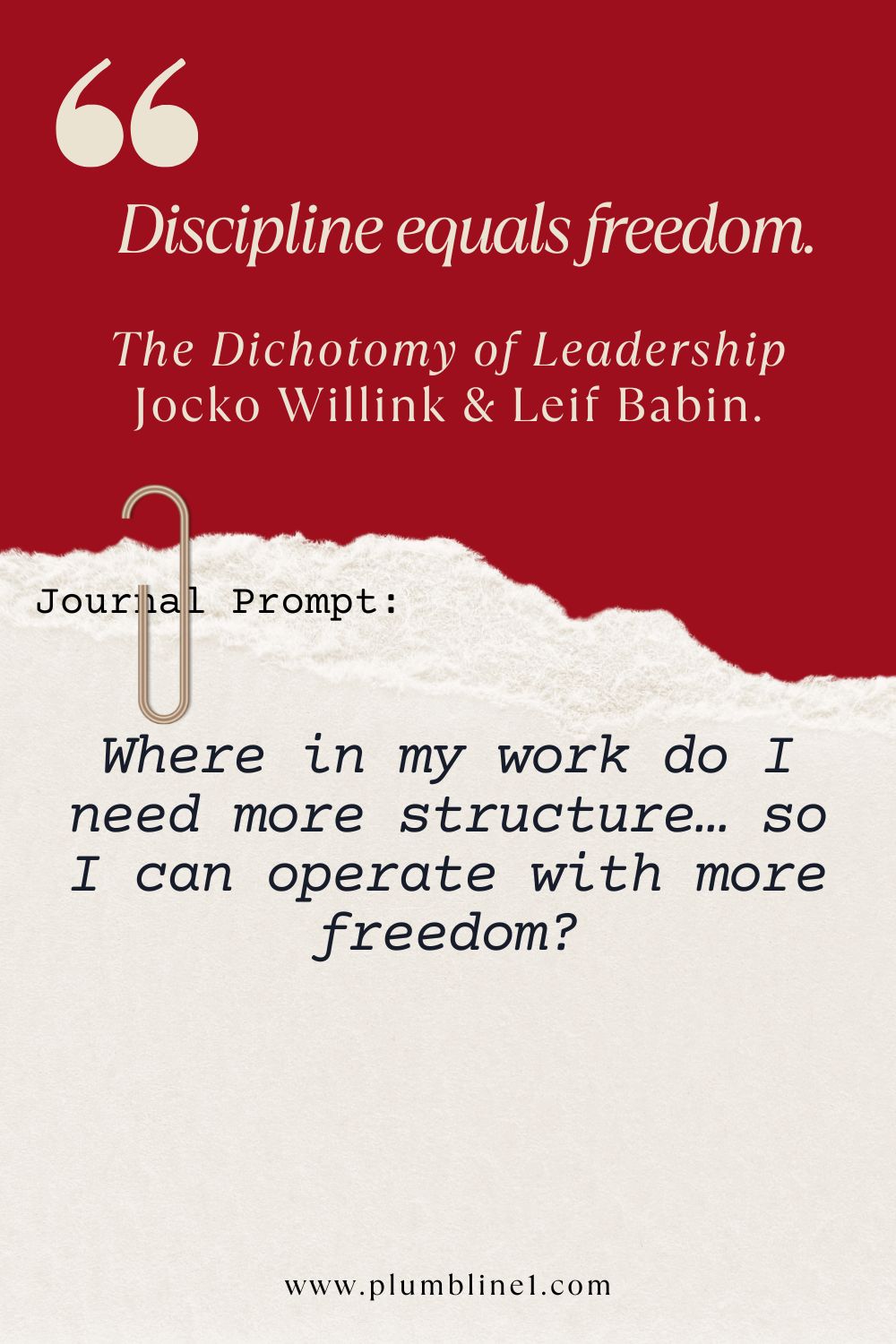
Define How Ideas Get Traction
Well-designed systems, processes and herirarchy don’t constrain creativity.
They channel it.
Has it been awhile since your team came up with a new innovative idea? Try giving them a better map to get there.
Journal Prompt: Where do you Need More Discipline?
And because journaling brings true clarity, here’s today’s journal prompt:
Where in your work do you need more structure—so you and your team can operate with more freedom?
Want help building systems that make innovation visible and communication scalable?
That’s exactly what I do.Incorporating discipline in creative endevaors brings guardrails to an otherwise
Book a free strategy call with me